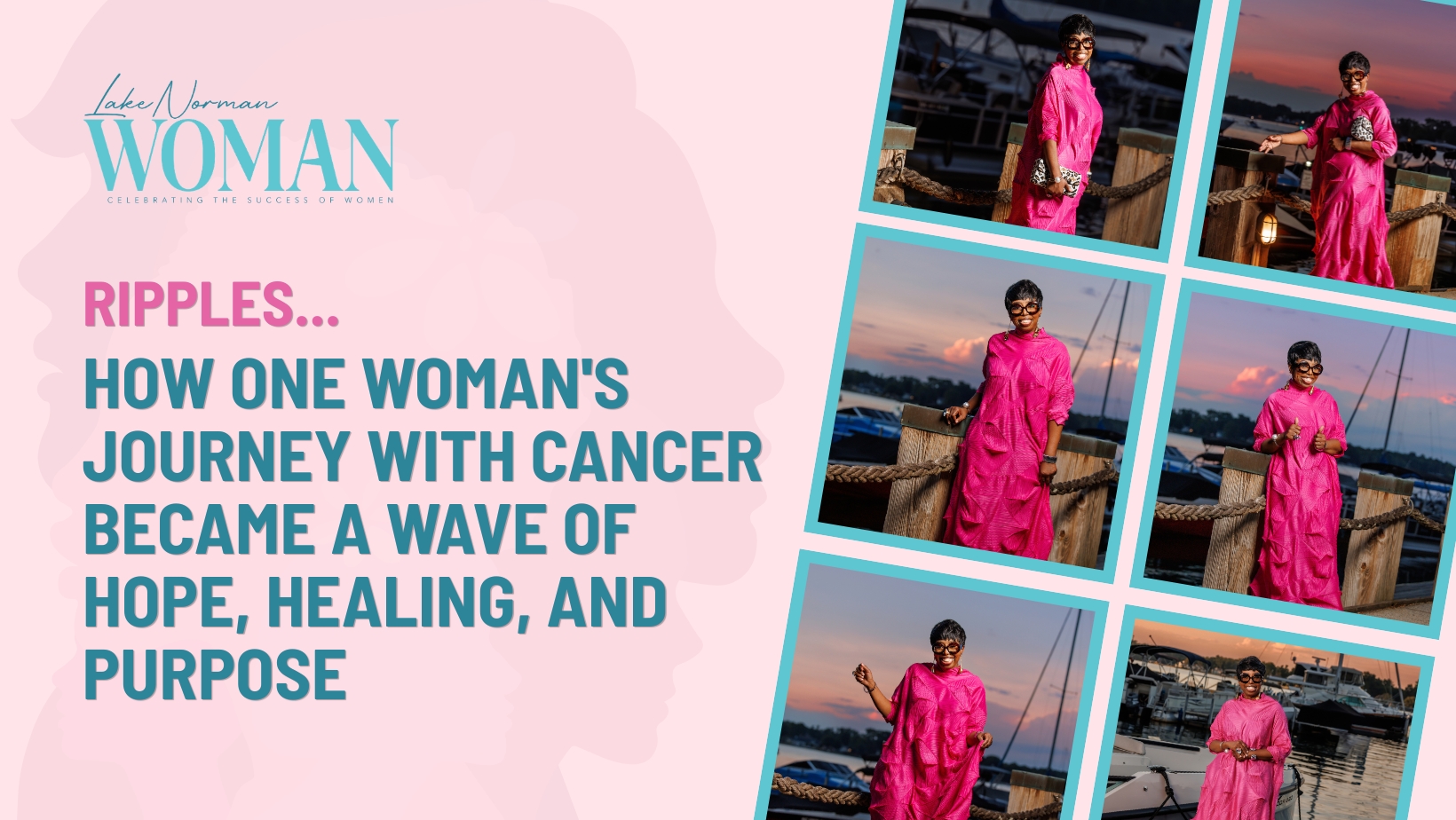
“One healed life can create a ripple effect touching the lives of families, strengthening communities, and restoring hope into the hearts of others.” —Coach C (Charlisa Herriott)
When she first received the news, she didn’t ask, “Why me?” Instead, she asked, “How can I serve and help others?”
Every now and then, someone comes along who has learned not simply to survive the storms of life, but to find purpose and power within them … to gather what they have learned and pass that knowledge along. Charlisa Herriott is one of those people. With faith as her compass, she has transformed one of life’s most difficult journeys into a calling and, in doing so, is touching lives in ways she may never fully realize.
Known to many as Coach C, the Crushing Chemo Chic®, Charlisa is a three-time cancer thriver, cancer survivorship coach, author, speaker, cancer care minister, advocate, and host of The HEALED Exchange™ with Coach C on WSIC Radio. But titles alone cannot begin to tell her story or explain the depth of the journey that led her here.
Charlisa was first diagnosed with thymoma, a rare cancer of the thymus, in 2007. Her treatment included chemotherapy, surgery, and radiation. She ultimately beat the disease … twice! But cancer returned, bringing with it another difficult and uncertain chapter.
This time, the road forward was not as clear. Chemotherapy was no longer an option. She had already undergone radiation twice, and surgery carried significant concerns about her quality of life. Once again, she found herself facing questions no one wants to ask.
“It changes the way you think,” Charlisa reflects. “The way you plan, the way you see tomorrow, and the very direction of your life. Cancer is like a pebble dropped into water. One person gets the diagnosis, but its impact is felt by spouses, children, extended family, friends, caregivers, workplaces, churches, and entire communities. But the ripples work in the other direction, too. When you share information, raise awareness, and spread love, the impact can travel far beyond where it began.”
Charlisa refuses to allow cancer to negatively define her. Instead, she has chosen to transform what she has endured into something that can serve others—bringing together faith, information, encouragement, and lived experiences for those who may be standing where she once stood.
“While a diagnosis may happen in a single moment,” she points out, “its effects rarely remain there. The questions can linger. The fear can follow. Even after treatment ends and loved ones breathe a collective sigh of relief, survivors often find themselves learning how to live in a body, and a world, that may feel different than it once did.”
By creating a safe space for women, Charlisa is also showing us how fear can be acknowledged without surrendering to it. A place where difficult questions can be asked. Where scars—both visible and invisible—are understood. And where healing is recognized as something far more complex than simply reaching the end of treatment.
“I am deeply honored,” she smiles, “to walk alongside incredible women on their journey from darkness to healing, from fear to celebration.”
Perhaps that word “alongside” is what makes her work so meaningful. Charlisa is not standing at a distance, offering advice about a road she has never traveled. She knows the language of scans, treatment decisions, uncertainty, and fear. She understands the exhausting cycle of waiting for answers and the emotional weight carried between appointments. She also understands that surviving cancer does not necessarily mean leaving cancer behind.
For many survivors, the physical scars tell only part of the story. There can also be anxiety, fear of recurrence, questions about identity, and the challenge of learning how to trust tomorrow again.
Charlisa helps women develop strategies for moving beyond fear and anxiety and toward joy, healing, and wholeness. Through her coaching, speaking, ministry, advocacy, and radio program, she continually encourages others to recognize that while cancer may become part of their story, it does not have to write the ending.
“Healing doesn’t end when treatment does,” Charlisa explains. “It continues when we choose to rise, renew, and live beyond the scars. A diagnosis is just the drop. The ripple, however, can reach far beyond the person who first receives the news.”
And perhaps that is the most powerful part of her story. Charlisa’s diagnosis may have been the drop, but it was never destined to be the end of the story. From that single point of impact came a life of service, advocacy, ministry, education, encouragement, and connection. One woman’s journey became a source of strength for another. One conversation opened the door for someone to ask a question. One shared experience reminded someone else that she was not alone. And the ripples go on … .