I once had client say to me, “He usually didn’t hurt me too bad.”
That is a sentiment I’ve heard too many times from my clients. Some were referencing physical abuse, others meaning emotionally and still others simply meaning callously.
The issue really isn’t the harm that they do, it’s the harm that she suffers. No matter the type of harm, self-diminishment is the result – regardless of the intention.
If you’re a goodhearted woman, you probably understand people more deeply than they understand themselves. You learned to keep the peace, not rock the boat and put yourself in other’s shoes. And somewhere along the way, that beautiful empathy turned into something heavier; something that asks more of you than it gives back.
Most women don’t become “too understanding” out of weakness. It’s usually a survival skill learned early. If you grew up reading the room, adjusting yourself or managing someone else’s emotions, you learned to understand people as a way to stay safe and connected and we keep doing it in adulthood.
It sounds like: “They didn’t mean to hurt me” or “They didn’t intentionally forget me” or “I didn’t remind them that they promised to keep their word”.
Each excuse has different words but they all sound the same – “I understand.”
That’s where the emotional cost begins. Every time we excuse behavior that hurts, a small part of us steps back. Every time we minimize our needs, we train others that our needs can be minimized. Every time you rationalize a red flag, you reinforce the belief that you should tolerate more than you deserve.
The confusion often comes from mixing empathy with responsibility. Clients have told me, “If I understand why they did it, I shouldn’t feel hurt.” Or, “If I understand their trauma, I should be patient.” But empathy doesn’t require you to carry someone else’s emotional weight. Understanding someone’s story doesn’t mean you have to absorb the impact of their behavior.
Empathy is simply seeing clearly. Responsibility is deciding what to do with what you see.
There’s a moment an empowered woman reaches — when she realizes she’s tired of being the emotional anchor for everyone else.
She begins asking new questions: “Do they reciprocate?” “Do they take responsibility?” “Do they show up emotionally?”
And when the answer is no, she doesn’t collapse. She doesn’t chase and she does not beg. She simply says, “I understand you… but I choose me.”
Empowerment isn’t loud. It’s the moment you stop pouring into relationships that never pour back. It’s when you stop carrying emotional weight that isn’t yours. It’s when you realize your empathy is a gift and not everyone has earned access to it.
If you’ve spent your life being “too understanding,” I want you to hear this clearly:
Your heart and empathy are beautiful. But your goodness should never cost you yourself.
Empathy without boundaries drains you. Empathy with boundaries strengthens you.
And you deserve to be understood just as deeply as you understand others and be the she, you were meant to be.
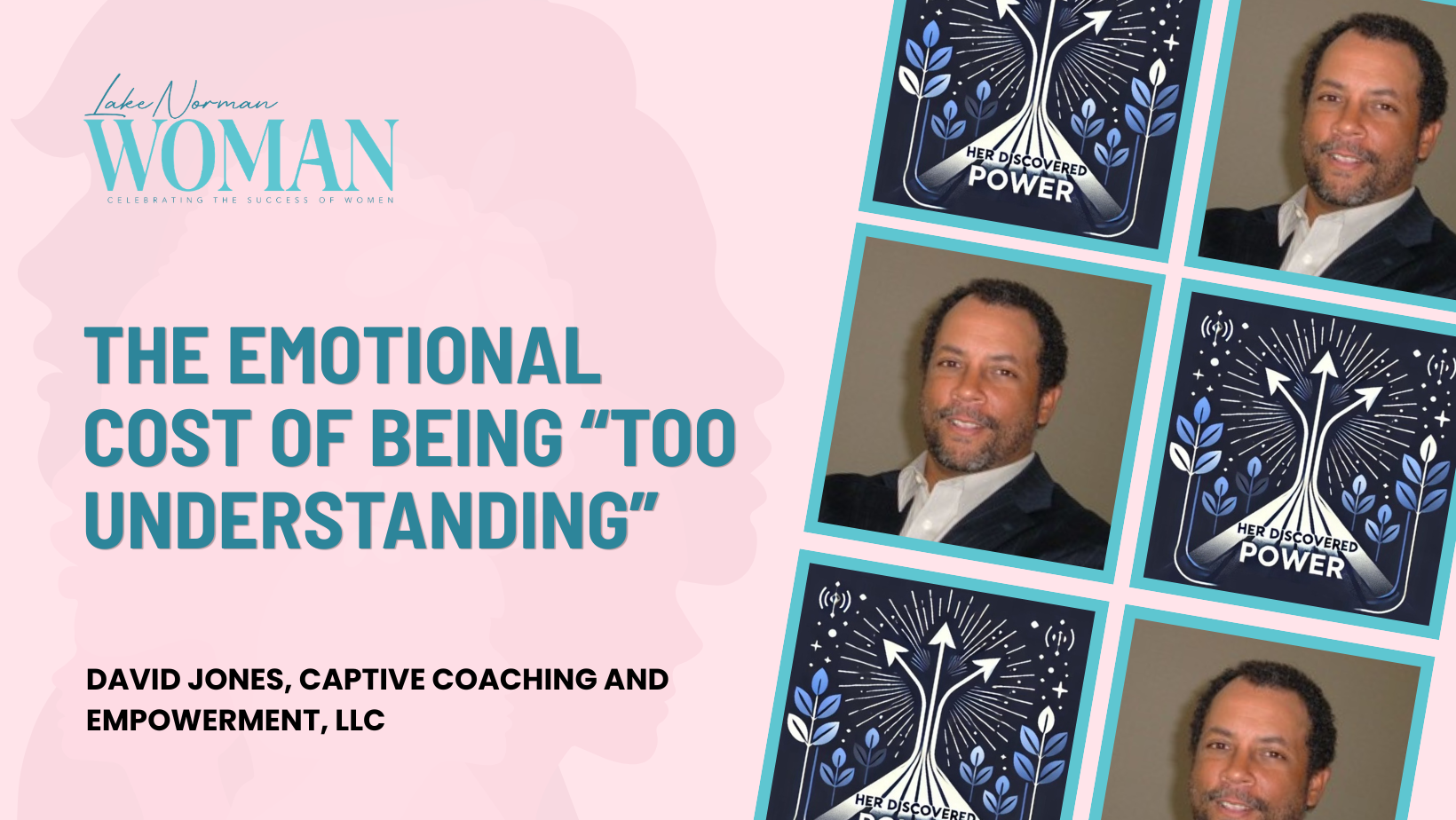
Dave Jones is the founder of Captive Coaching and Empowerment. For years he has helped good-hearted women overcome drama and trauma to build confidence, set healthy boundaries, and step into their power. His passion for this work is deeply personal, inspired by the struggles of the women in his own life—especially his mom and sister. He’s also the host of the weekly podcast Her Discovered Power and now shares his insights in a monthly column by the same name in Lake Norman Woman magazine. Through coaching and courses, Captive Coaching & Empowerment is committed to helping women live more empowered, intentional lives. E-mail [email protected] or visit www.captivecoachingandempowerment.com.