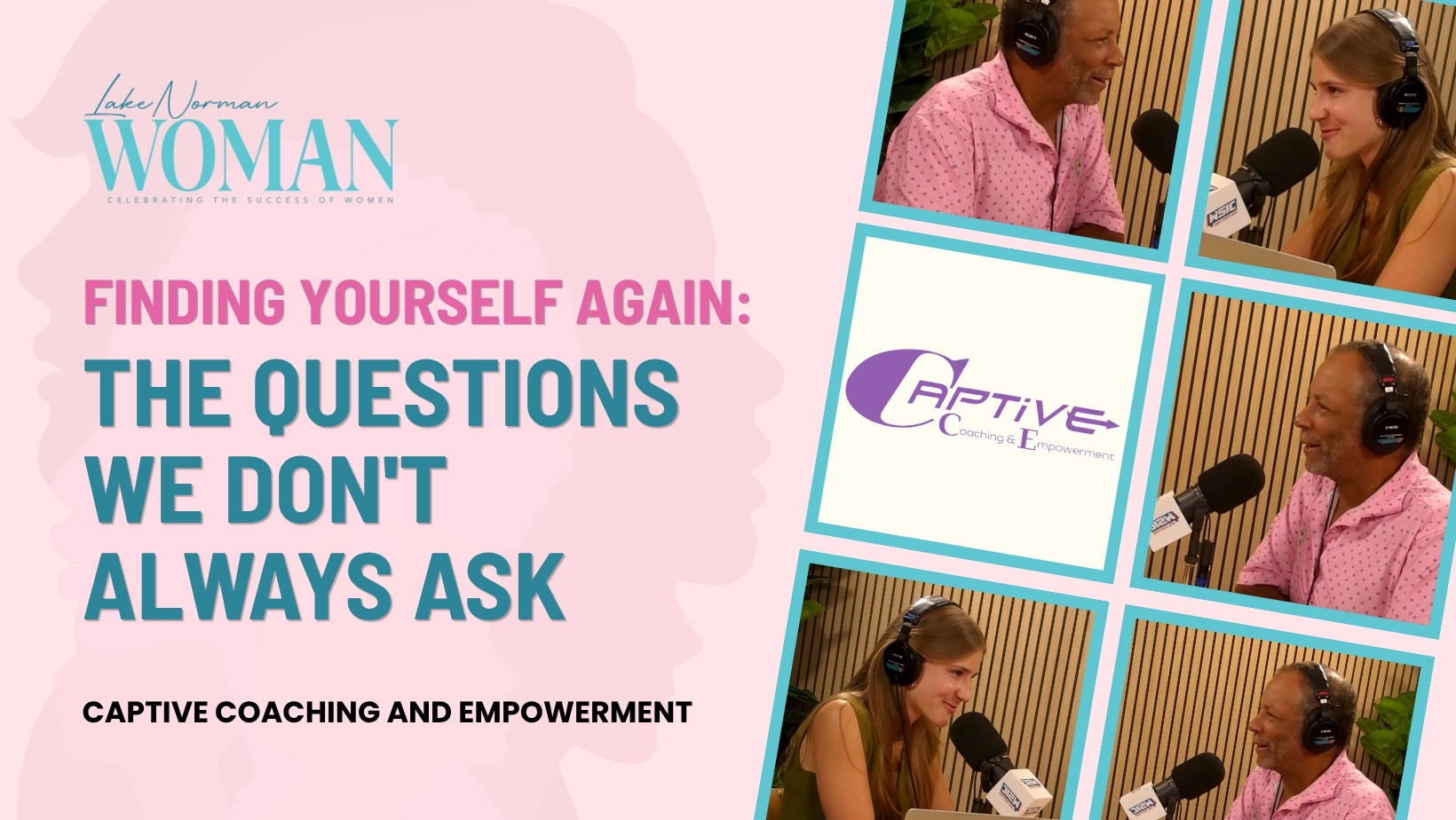
From setting healthy boundaries to navigating relationships, David Jones of Captive Coaching and Empowerment answers personal questions submitted by Good Morning LKN listeners.
When was the last time you stopped to ask yourself what truly makes you happy? Between caring for family, managing relationships, and pursuing professional success, it’s easy to lose sight of your own needs. But finding yourself again often begins with understanding the emotional patterns that shape your life.
When David “Dave” Jones, president of Captive Coaching and Empowerment, joined Good Morning LKN as a guest host, listeners submitted questions about setting healthy boundaries, navigating relationships, overcoming emotional habits, and rediscovering personal fulfillment.
With more than 20 years of experience helping women navigate emotional challenges and personal growth, Dave shared his perspective on the patterns that influence our decisions, relationships, and sense of happiness.
Want to hear more from Dave? Watch the October 16 episode of Good Morning LKN, featuring guest hosts David Jones and Elizabeth Kostmayer of Captive Coaching and Empowerment, for more conversations about personal growth, relationships, and the challenges we navigate in everyday life.
When Caring for Everyone Else Means Losing Yourself
One listener, a woman in her 50s, shared that she had spent most of her adult life taking care of her husband, children, and parents. Now, after years of putting everyone else first, she no longer knew what made her happy.
For Dave, the answer begins with rediscovering the person behind all those responsibilities.
“You’ve spent enough of your life living solely for others,” he explains, emphasizing that women deserve the opportunity to understand what brings them happiness and fulfillment.
Through his Personal Discovery Coaching approach, Dave works with clients to identify the emotional patterns that may have shaped their choices for years. He believes that understanding these influences can help women reconnect with their authentic selves without abandoning the people they love.
That same struggle often appears when women try to establish boundaries.
Another listener admitted feeling guilty every time she attempted to say no to friends or family, fearing she was letting everyone down.
Dave explains that boundaries are not rules designed to control other people. They are ways of respecting our own time, emotions, and well-being.
But knowing how to establish a boundary and believing we deserve one are two different things.
He has found that many good-hearted women have become so accustomed to meeting everyone else’s needs that protecting their own can feel uncomfortable. Learning to recognize their right to personal boundaries, he says, can be an important part of developing healthier relationships.
Understanding the Patterns Behind Our Relationships
Relationships were another common theme among listener submissions.
One husband shared that after 22 years of marriage, he and his wife felt more like roommates than partners. There was no major conflict, but the connection they once shared seemed to have faded.
Dave believes couples can benefit from exploring these changes, even when their relationship isn’t defined by arguments or serious disagreements.
His approach begins with understanding how each partner feels about the relationship and identifying what may have contributed to the emotional distance. For some couples, that process can help rebuild closeness. For others, it may lead to a better understanding of what they want their relationship to become.
He also points out that meaningful intimacy can exist even when the passion experienced earlier in a relationship has changed.
Another listener, divorced for three years, wondered how to stop choosing the wrong partners and overcome the fear of entering another relationship.
Rather than focusing entirely on avoiding certain people, Dave encourages individuals to examine what attracts them to particular partners in the first place.
Understanding why certain relationship patterns repeat, he believes, can help people develop a clearer picture of the kind of partner who truly complements their lives.
Why Success Doesn’t Always Feel Like Success
A small-business owner posed a question that may resonate with many ambitious women: Why is it so hard to feel successful when everything appears to be going well?
Despite achieving her goals, she constantly felt that she wasn’t doing enough.
Dave explains that our definition of success is often shaped long before we begin pursuing it. Family expectations, community standards, comparisons with siblings, and the desire for approval can all influence what we believe achievement should look like.
As a result, it’s possible to accomplish everything we set out to do and still feel unsatisfied.
He encourages people to examine whether their goals reflect what genuinely fulfills them or simply what they’ve learned to believe is expected.
After all, financial success, recognition, and professional accomplishments may provide opportunities, but they don’t necessarily guarantee the peace or contentment we hope to find through them.
Recognizing the Habits We Carry Into Adulthood
Some of the most personal questions centered on emotional patterns learned early in life.
One 45-year-old listener admitted that he still caught himself reacting to situations exactly as his father had. He wanted to know whether those behaviors could change.
Dave believes many of our emotional responses develop during childhood as we observe parents, caregivers, and other influential figures.
Those patterns may have once helped us feel accepted or secure, but they can continue into adulthood even when they no longer serve us.
Through Personal Discovery Coaching, Dave focuses on helping people recognize those influences and understand why they respond to certain situations the way they do.
A similar concern came from a listener who had spent a lifetime pushing through stress and avoiding conversations about feelings.
For Dave, learning to acknowledge emotions involves more than simply deciding to become vulnerable.
He believes emotional self-protection can become deeply ingrained over time, making it difficult to recognize or express what we’re feeling.
One message he emphasizes throughout his coaching is that our emotions are real and valid. Understanding why we’ve learned to suppress them, he says, can be an important step toward developing a healthier relationship with ourselves.
What Makes Personal Discovery Coaching Different?
Several listeners were curious about Dave’s work itself, including how Personal Discovery Coaching differs from traditional life coaching or therapy.
Dave describes his approach as a process of helping individuals understand the underlying emotional patterns that influence how they think, react, make decisions, and interact with others.
While therapy is a clinical discipline that can address mental health concerns, his coaching focuses on personal discovery, emotional awareness, and understanding behaviors that clients want to change.
At the center of his work is a proprietary coaching system he calls the APACHE Framework, which stands for Advanced Psychology Applying Conditions of the Human Experience.
The framework follows six principles: Awareness, Permission, Acceptance, Choice, Healing, and Embodiment.
According to Dave, the process begins with recognizing an underlying emotional pattern, understanding how it developed, and giving ourselves permission to respond differently. The ultimate goal is what he calls embodiment, when healthier responses become a natural part of how we approach everyday life.
Listeners also asked about the meaning behind his company’s name, CAPTIVE, an acronym for Coaching And Personal Transformation Increasing Value and Empowerment.
Together, these concepts reflect his belief that personal growth begins with developing a deeper understanding of ourselves.
Making Room for the Person You’re Becoming
Although the questions submitted by Good Morning LKN listeners touched on different stages of life, they shared a familiar thread.
Whether we’re navigating a changing marriage, questioning our accomplishments, learning to establish boundaries, or rediscovering what makes us happy, understanding ourselves can change how we approach the challenges ahead.
For women especially, that can mean recognizing how easily personal needs become secondary to careers, relationships, families, and the expectations of others.
Dave’s message is that many of the patterns shaping our lives deserve a closer look, particularly when they begin standing in the way of the fulfillment we’re seeking.
We may not always have immediate answers to the questions that trouble us. But becoming more curious about why we feel, react, and choose the way we do can open the door to meaningful personal growth.
And perhaps one of the most important questions we can ask ourselves is not what everyone else needs from us, but what we need to feel genuinely fulfilled in our own lives.
David A. Jones is president of Captive Coaching and Empowerment, LLC, where he specializes in Personal Discovery Coaching and helping individuals better understand the emotional patterns influencing their lives. To learn more, visit www.captivecoachingandempowerment.com or call (704) 750-1416.