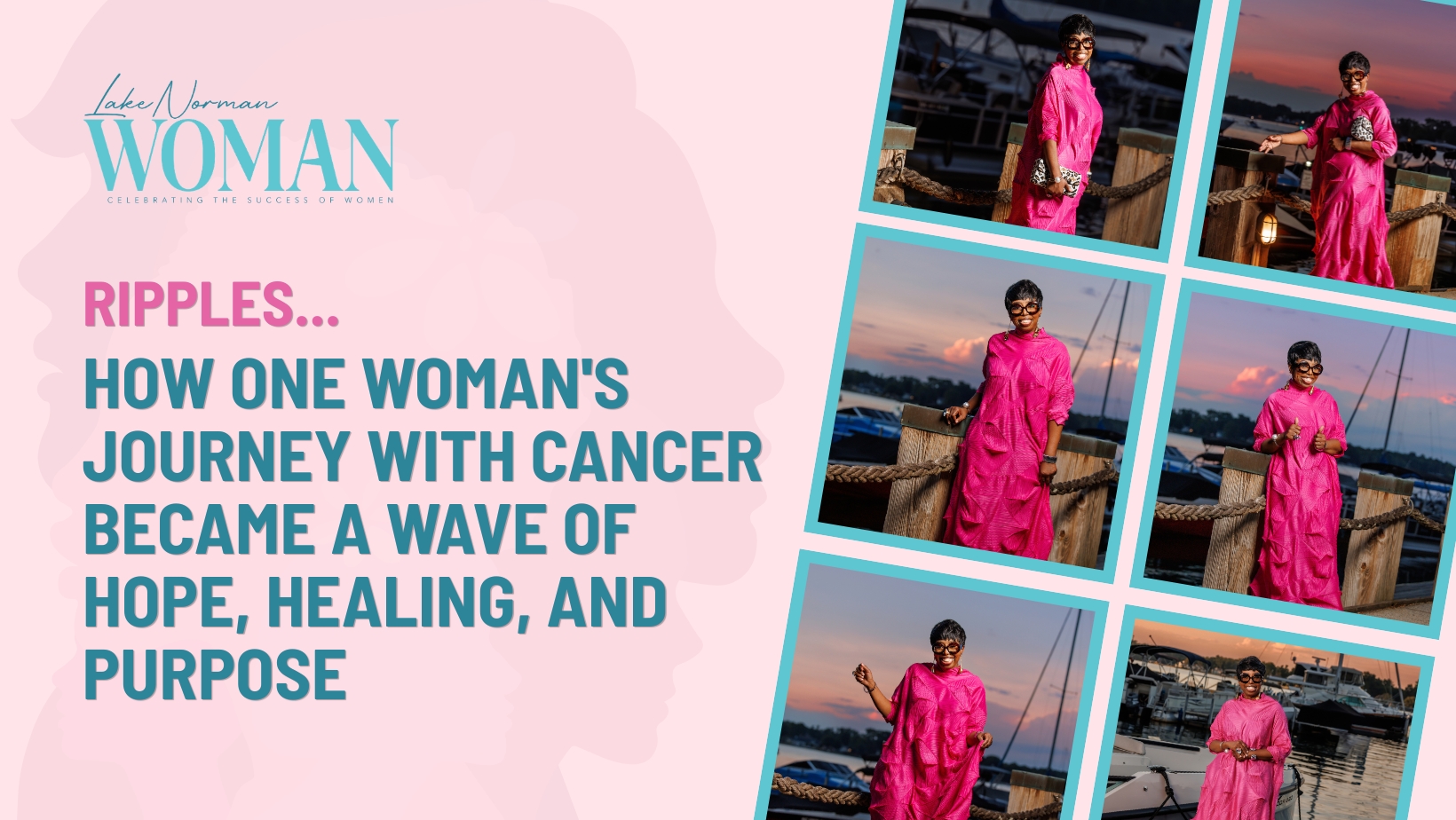

Davidson’s Josephine Fermanian shifted from business to biomedical research after her mother’s gallbladder cancer diagnosis in 2017. Over seven years, she uncovered two major advances targeting post-surgical residual cancer cells and adapted the approach to metastatic breast cancer—culminating in a 2025 publication on cryoablation with intratumoral immunotherapy. Despite earning a highly competitive national fellowship later cut by federal budget reductions, Fermanian remains focused on moving pilot studies into treatment centers. She’s now inviting Lake Norman, Charlotte, and North Carolina neighbors to help sustain lifesaving research, launch collaborative pilot projects, and build an action-oriented health innovation think tank.
By: Josephine Fermanian
When Josephine Fermanian’s mother was diagnosed with gallbladder cancer in January 2017, she left her career in business to dedicate herself fully to cancer research after finding knowledge gaps in both prevention and treatment at the hospital.
For the past seven years, she has worked tirelessly to understand and address cancer cells that remain after surgical resection and result in metastatic cancer.
This dedication has led to two major discoveries in both the prevention and treatment of gallbladder cancer. Building on that framework, Josephine then applied her research to metastatic breast cancer, with her capstone project at The George Washington University School of Medicine and Health Sciences leading to an international publication in Cancers (Basel, Switzerland) on June 4, 2025, on the use of cryoablation and intratumoral immunotherapy for breast cancer to reduce metastatic disease.
At the end of 2024, Josephine was selected from nearly 8,000 candidates for a highly competitive national fellowship. Unfortunately, the program was eliminated due to federal budget cuts leaving her without critical support for her research or a way to pay back her graduate student loans.
Now, instead of being in the implementation stage of pilot studies in cancer treatment centers, Josephine faces the difficult reality of needing community support to continue her work.
Friends and neighbors in Davidson have encouraged her to share her story publicly as a call to action for community support in the Lake Norman, Charlotte, the greater North Carolina community, and beyond.
A Ko-fi linked to my Mother of Innovation Instagram (https://ko-fi.com/motherofinnovation) has been created to help support funding needed to:
- Continue her cancer research
- Support future pilot studies in cancer treatment centers
- Starting an action-oriented Think Tank to collaborate with others to accelerate innovative solutions for global health problems
Josephine’s story is one of resilience, innovation, and hope. She has made discoveries that could change how we approach some of the deadliest cancers, but she needs the community’s help to continue this life-saving work.
For more information or to connect with her directly, please contact: [email protected].